This post contains affiliate links. If you purchase through my links, I may earn a small commission at no extra cost to you. Thank you for supporting Cozy Room Ideas!
You’ve tried. The dried flowers are on the nightstand. There’s a throw on the bed. Maybe a macrame piece on the wall you liked in the product photo. Your room has every element from the cottagecore bedroom ideas you keep saving on Pinterest. It still looks like your apartment — polished, fine, and completely without atmosphere.
The rooms you keep saving have something yours doesn’t — and it’s not any specific object. It’s a quality of light, a softness in the surfaces, a sense that the room was built slowly by someone with a clear idea of how it should feel. What you’re chasing isn’t a product. It’s a material foundation, and the one you’re working with right now is fighting everything you’ve placed on top of it.
Cottagecore atmosphere is a surface behavior phenomenon. It comes from how materials scatter light — not from which objects you choose. Here’s how to build that foundation, working from the largest surface in the room outward.
The Real Reason Most Cottagecore Bedroom Ideas Don’t Work
Walk into any room that looks genuinely cottagecore and look past the dried flowers, the candles, the layered textiles. Notice what the bed looks like. The curtains. The quality of the light. These aren’t details — they’re the room’s foundation, and they’re doing more visual work than everything placed on top of them.
Your dried flowers are landing on a crisp white duvet cover. Your macrame is hanging above a bed that reads like a hotel room. Your warm lamp is competing with overhead lighting that flattens every texture it touches. The elements are right. The foundation is wrong.
Most guides treat cottagecore as a set of objects to collect — dried florals, vintage-adjacent textiles, organic accessories. That framing leads to the exact room you already have: a standard modern bedroom with cottagecore items placed inside it. The items don’t transform the room. They sit on top of a foundation that’s working against them.
The fix isn’t more things. It’s changing what the room’s largest surfaces are made of — and what they do with light. If you’ve been decorating for a year and your room still feels like a version of someone else’s aesthetic, this is why. And it’s the easiest thing to change.

The Surface That Sets the Register
Washed cotton wrinkles along its fold lines. Linen shows its weave from across the room. Chunky knit reveals individual loops. These aren’t flaws — they’re the mechanism. Material irregularities scatter light in dozens of small directions at once, which is what makes a room feel warm and dimensional without any styling effort. Smooth modern fabrics do the opposite: a crisp duvet cover reflects light uniformly back at you, and that uniformity is what produces the flat, staged quality that makes even a well-styled room look like nobody actually lives in it.
💡 Why smooth fabrics fight cottagecore Smooth synthetic and crisp-finish cotton fabrics reflect light uniformly — which reads as flat and staged from across the room. Washed cotton, ramie, and linen-weave surfaces scatter light in multiple small directions at once. That scattering is what produces the warm, dimensional quality in the rooms you keep saving. It isn’t just an aesthetic choice. It’s surface physics.
The bedding is the single largest surface in your bedroom. Whatever that surface does with light, the whole room does. Change the duvet cover to a washed cotton or linen-like fabric and you change the room’s visual character more than any number of accessories placed on top — no repainting, no new furniture, no styling effort required.
The bedding is the largest surface in your bedroom. Whatever it does with light, the whole room does.
The Bedsure 100% Washed Cotton Duvet Cover in Oatmeal is the specific product this post is built around. The washed cotton surface wrinkles along every fold line — not messily, but in the way that confirms the fabric is real, soft, and inhabited. The Oatmeal colorway reads as warm ivory from a distance: not bright white, not yellow, exactly the warm neutral zone that cottagecore imagery occupies. Put it on a made bed and step back. The room immediately reads differently. That’s the surface at work before you’ve touched anything else.
The Light That Makes a Cottagecore Bedroom Real
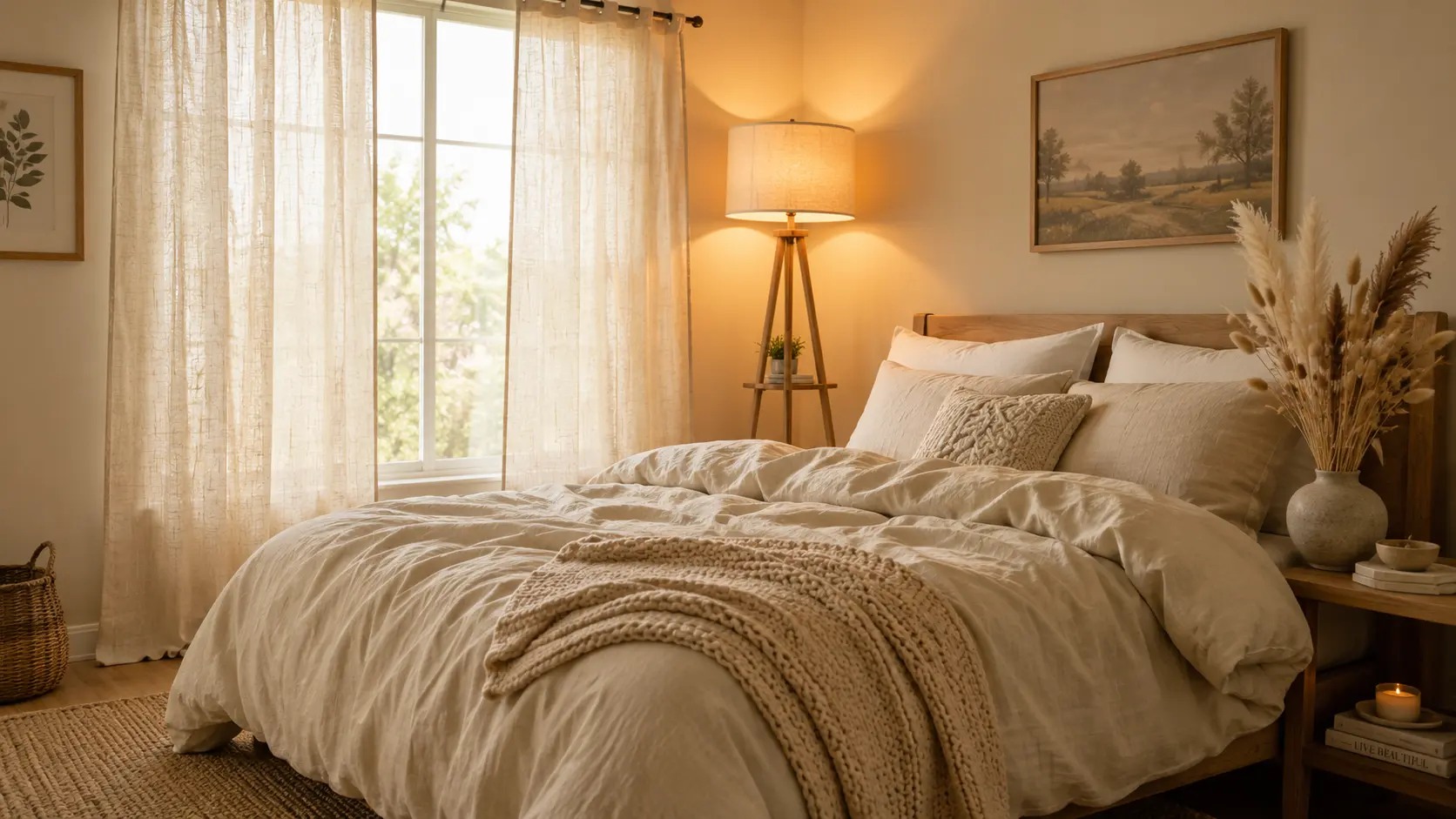
Here’s the room at 7am once the foundation is in place. The Bedsure Oatmeal duvet is on the bed, wrinkled where you pushed it back this morning. The LAMIT curtains hang at the window — not blocking the light, filtering it, softening direct morning sun into something warm and hazy before it reaches the room. The OUTON floor lamp is on in the corner, its beige linen shade turning the LED bulb’s output amber before it spills outward. The light doesn’t reach the ceiling. It sits low, pools at bed height, catches the washed cotton surface at an angle that makes every fold line visible.

That quality of light — low, warm, diffused through fabric before it touches anything — is the specific atmospheric quality of every cottagecore bedroom worth saving. It isn’t magic. It’s the combination of where the light source sits and what it passes through on the way to the room.
That quality of light — low, warm, diffused through fabric before it touches anything — is the atmospheric quality of every cottagecore bedroom worth saving.
The OUTON Wood Tripod Floor Lamp with Shelves is doing the corner work. The wood tripod base positions the lamp at bed level rather than above it; the beige linen shade diffuses the light into something warm and indirect before it leaves the fixture. The built-in shelf on the tripod frame is a practical detail — a small ceramic vessel or a single book sits there naturally, without looking arranged. But the lamp’s primary job is atmospheric: it creates the low warm light source that makes the room’s horizontal surfaces — the bed, the rug, the nightstand — look intentionally lit rather than incidentally present.
The LAMIT Natural Ivory Semi Sheer Linen Curtains in Natural complete the light system. The linen-textured polyester surface filters rather than blocks — morning light comes through softened and diffused, arriving as a warm glow rather than sharp directional shafts. Hang these before you style anything else in the room and watch what happens to the light quality at different times of day. This is the specific transformation that every other layer in this post depends on to land correctly.

Your bedroom should feel like yours the moment you walk in — not eventually, not after more purchases.
The Cozy Bedroom Styling Checklist walks through every layer of this system in the order it actually works — so nothing gets placed before the foundation is ready to hold it.
The Layering Order That Tells the Bed It’s Done
The bed is already transformed by the duvet. What makes it look like the beds in the rooms you save is the layering that goes on top — but the order matters. The wrong sequence makes the bed look overdone. The right sequence makes it look gathered.
Start with the base: the Bedsure Oatmeal duvet, made but not tight. Smooth it once, then leave it. The wrinkle lines are the point.
Second layer: fold the Chunky Cable Knit Throw Blanket Lightweight Beige — 100% organic cotton — across the lower third of the bed. Don’t lay it flat. Fold it loosely once and let the cable knit structure show. The individual loops are visible from across the room. Two different surfaces in the same warm neutral tonal family. The contrast creates depth without visual noise. For more ways throws interact with different bedding styles, this post on bedroom throw ideas covers it fully.
Third layer: sleeping pillows dressed in the Foindtower Pack of 2 Decorative Linen Solid Throw Pillow Covers in Natural Beige. The 70% ramie, 30% cotton surface reads as quiet and grounded — slightly more substantial in hand than the washed cotton beneath it, without competing with it.
Front layer: two Foindtower Set of 2 Decorative Linen Check Throw Pillow Covers in Beige. The linen-and-polyester checkered weave adds a vintage, hand-gathered texture to the front of the arrangement. Subtle enough not to compete with the layers behind it. Distinct enough to make the whole bed look like it was styled by someone who knew exactly what they were doing.
None of this requires installation, moving furniture, or a conversation with your landlord. The entire system is placed and removed — fully renter-safe.

The One Detail That Separates Cottagecore Bedroom Decor From Just Cozy
There’s a specific quality in cottagecore rooms that the word “cozy” doesn’t fully capture. Cozy is warm and comfortable. Cottagecore is all of that — plus the sense that someone gathered these things slowly and privately, not assembled them efficiently from a cart.
Organic elements produce that quality because they’re not uniform. The ANPROOR Dried Pampas Grass Decor — 100 stems including white and warm brown pampas, bunny tails, and dried reed grass — arranged loosely in a simple ceramic vessel on the nightstand does something a candle, a geometric plant pot, or a framed print cannot. The stems splay in different directions. The bunny tails cluster unevenly. The varying heights create a small irregular cloud of texture that catches the lamp’s ambient light differently from every angle in the room.
💡 The gathered quality Organic elements like dried botanicals read as accumulated because they’re physically irregular — varying heights, uneven clusters, stems that don’t repeat. This natural variation scatters light the same way washed fabric does, and produces the specific visual quality that reads as “this room was built over time” rather than “this room was styled in an afternoon.” No symmetrical, perfect object produces this. The imperfection is the mechanism.
This detail doesn’t create the cottagecore atmosphere — it completes it. That distinction matters. The foundation (washed cotton, warm diffused light, linen-textured curtains) is already doing the atmospheric work. The organic layer is the detail that confirms the room’s intention. If you’re noticing that one cold or modern element is undoing everything the organic layer is building, this post on why cozy bedrooms stop feeling cozy diagnoses exactly that.

The Floor That Grounds It All
The floor is the one surface most bedroom makeovers skip — not because it’s unimportant, but because it’s easy to overlook when you’re focused on the bed and the walls. A room that has everything else right and no rug beneath the bed feels unfinished. Like the bed is floating. Like the work isn’t quite done.
The nuLOOM Rigo Jute Hand Woven Area Rug in Natural solves this without competing with anything above it. Flat-woven jute in a solid natural tone — it gives the bed something to sit in, establishes a defined floor level, and brings the room into a single visual field. The jute weave adds one more irregular organic surface to the room’s material vocabulary without introducing any color outside the warm neutral family.
Step back after placing the rug and look at the room as a whole. With it in place, everything above it looks considered. The cottagecore bedroom you’ve been saving on Pinterest — morning light through linen curtains, a layered bed that looks gathered rather than styled, warm amber lamp light sitting low in the corner — is happening in your actual room. Do the rug this weekend.

Shop This Cottagecore Bedroom
Start with the Bedsure Oatmeal duvet — it’s the largest surface in the room and the one that changes how everything else lands. Add the lamp and curtains next. Everything else builds on what those three establish.
Bedsure Washed
Cotton Duvet
The oatmeal washed cotton surface wrinkles along every fold line and scatters light instead of reflecting it flat. This is the product that changes the room’s visual register before you touch anything else. The entire system in this post depends on getting this surface right first.
OUTON Wood
Tripod Lamp
The wood tripod base and beige linen shade position warm light at bed level — not overhead. The built-in shelf holds a small ceramic vessel or book without looking arranged. This lamp is doing the atmospheric work that overhead fixtures never could.
LAMIT Natural
Linen Curtains
These light-filtering panels in Natural soften direct morning light into a warm haze before it reaches the room. The linen-textured surface diffuses rather than blocks — which is the specific quality that makes cottagecore bedroom mornings look the way they do in the rooms you keep saving.
Chunky Cable
Knit Throw
100% organic cotton in Beige, folded loosely across the lower third of the bed. The cable knit loops are visible from across the room — a distinctly different surface from the washed cotton beneath it, in the same warm neutral tonal family. This is what makes a layered bed look gathered rather than busy.
Foindtower Linen
Solid Pillow Covers
70% ramie, 30% cotton in Natural Beige — a solid, quiet surface that grounds the pillow stack behind the check covers placed in front. The ramie blend sits slightly more substantial than washed cotton and gives the arrangement a deliberate, finished base without competing with the layering beneath it.
Foindtower Linen
Check Pillow Covers
Linen and polyester blend in Beige with a subtle checkered weave — the front layer of the pillow arrangement that adds a quiet vintage texture to the stack. The check reads as hand-gathered rather than bought. It’s the one detail that makes the whole pillow arrangement look like it was styled with clear intention.
ANPROOR Dried
Pampas Grass
100 stems — white and warm brown pampas, bunny tails, dried reed grass. Arranged loosely in a ceramic vessel, the natural variation in height and cluster direction produces the visual quality that reads as gathered over time. This is the detail that tips a styled room into a room with actual character.
nuLOOM Rigo
Jute Rug
Flat-woven jute in Natural — the rug that gives the bed something to sit in and the whole room a defined floor level. The natural jute weave adds one more irregular organic surface without introducing any color outside the warm neutral range. With it in place, the room looks designed instead of assembled.
The cottagecore bedroom isn’t built from finding the right objects — it’s built by changing how your room’s largest surfaces behave, and then adding everything else on top of a foundation that holds it. Start with the duvet. Change the light. Build the layers outward. If you want to build this system on a tighter budget, the bedroom ideas on a budget post covers the most affordable entry point for each layer.
The morning you’ve been saving on Pinterest starts happening in your actual room. That’s the point.
If you’ve been saving pins for months and your bedroom still looks the same — this is what actually moves you forward.
The Cozy Bedroom Styling Checklist gives you the complete layer sequence — from the foundation surface outward — so every purchase lands in the right order and nothing sits on a base that isn’t ready for it yet.
Leave a Reply